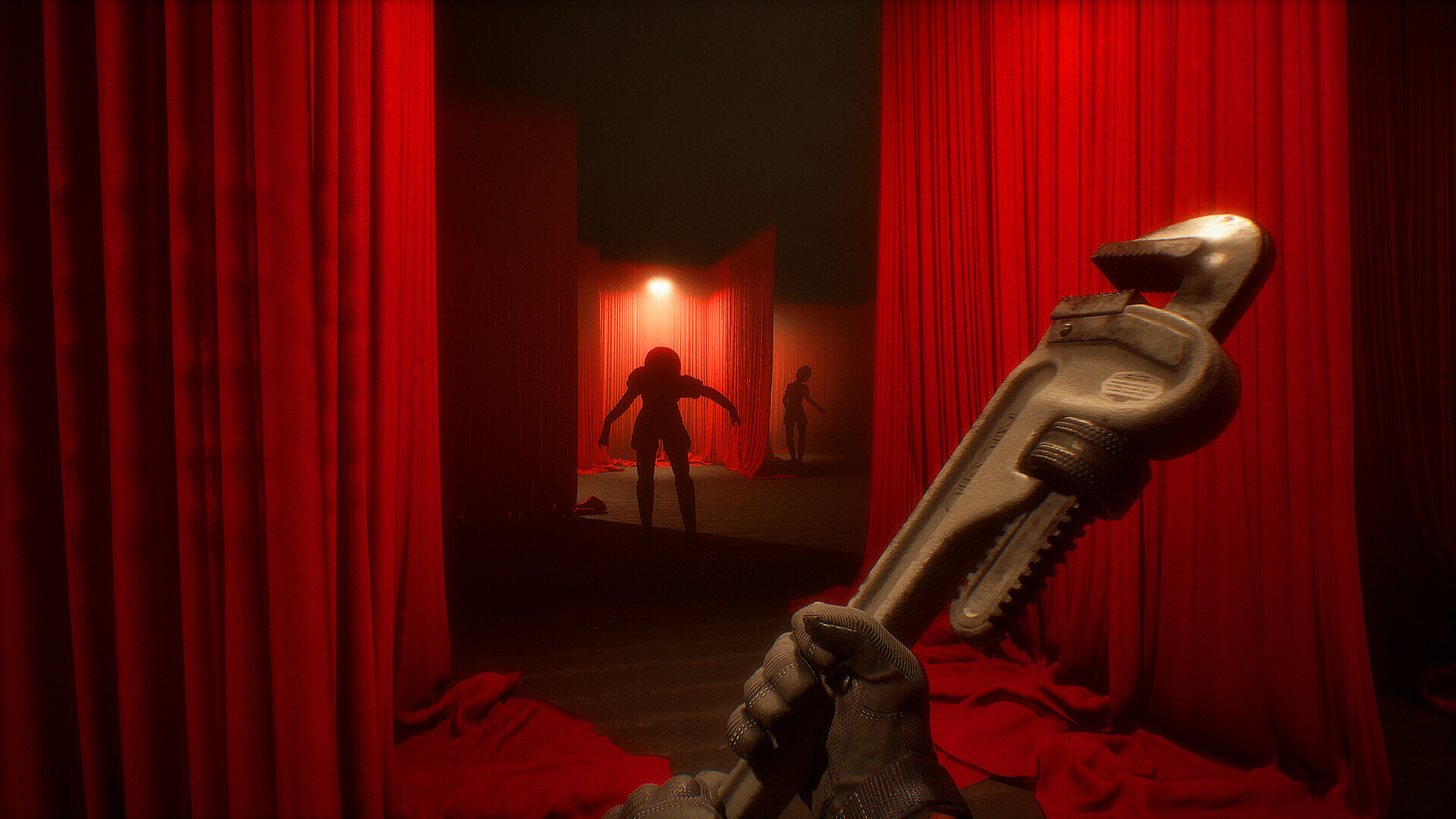
Anomaly Pockets are procedurally generated realities bleeding into the world through unstable portals, and the Prologue's introductory island has those portals on it from your first deployment. They are not a late-game unlock.
More context
Crossing a threshold takes you into strange dimensions inspired by liminal spaces, where the anomalies you are sent to contain are actually found — which is what makes entry a decision about a husk body and your provisions rather than a detour.
On this page
What anomaly pockets are
A Pocket is a generated pocket of reality, not a hand-built dungeon. It exists because something tore open in the fabric of space-time, and what you walk into is the inside of that tear: spaces inspired by liminal spaces, the in-between places people describe when they feel somewhere is wrong without being able to say why.
Three things follow from that framing, and they change how you read a run once you are inside:
- Familiar surroundings stop being a comfort. The sense of place you navigate by outside does not apply here.
- The rules of reality change. What you learned about the island does not transfer.
- Your job is observation. The anomalies, puzzles and challenges inside need careful observation, not a route you can run from memory.
Where the portals are
The portals sit on the introductory island itself. That placement is deliberate for a prologue: the Anomaly Pocket content is reachable from the first deployment rather than gated behind progress you do not have yet.
Practically, that means the threshold is an island destination you decide to travel to. You are not waiting for it to unlock, and you are not carrying a special item to open it. What you do need is a body and enough supplies to survive whatever is on the other side, because the island does not stay stocked once you leave it.
What you find inside
Inside a Pocket you encounter anomalies, puzzles and challenges, and the layouts and challenges vary between playthroughs. Investigation and discovery are part of every return rather than something you clear once and tick off.
For the Prologue specifically, these procedurally generated spaces were expanded with new layouts and challenges, so the Pocket content is larger than it was in the previous playtest.
That variation is the reason a Pocket is worth a commitment rather than a quick look. If a run gives you an anomaly you have already handled somewhere else, you will still be reading a layout you have not seen, and the same is true in reverse — a layout that gave you nothing last time is not evidence that it gives nothing this time.
Why entering one costs you
A Pocket is the setting in which containment work happens. The anomalies you are sent to contain are found inside these generated spaces, so the portal is not a side activity branching off the real job — it is the job.
That is what makes entry a real decision. You are committing:
A husk.
The body you take through the threshold is the body that has to come back out working, and it is one of the husks described in the husk system guide.
Provisions.
Food, water and consumables for however long you are in there, competing with the room you wanted for loot.
Detection gear.
You need to find the anomaly before it becomes a problem, and finding it is equipment-driven.
Once you are inside, the work itself has a shape: secure the perimeter, watch for enemies that phase through solid matter, cover the angles, and get out. The how to contain anomalies guide covers that run step by step.
Where generation shows up
The island's events are generated rather than placed, and Anomaly Pockets are the clearest case. The same consequence shows up everywhere on the map: returning to a location you know does not guarantee a familiar encounter.
If you are trying to plan a route across the island rather than into one portal, that broader picture — what else on the map changes without warning, and how to read a situation on the fly — is in the dynamic events guide.